
Illustrative: In our Nepal evaluation, the most useful insights came from engaging with different perspectives long enough to understand why they differed.
By Sarah Staub
Data can tell you that outcomes varied. It doesn’t always tell you why—and that’s where the perspectives of the people who were there become essential data in their own right. Building community engagement into evaluation design—not as an add-on to standard outcome measures, but alongside them — helps surface what actually drove success and whether it could work somewhere else. This is where community-centered and participatory approaches become valuable.
When Measurement Outpaces Understanding
When we think of data in the context of program monitoring and evaluation (M&E), we often think of numbers—targets reached, activities completed. We count: how many supplies were delivered? How many students attended? What was the percentage change in the burden of disease? And we measure how those numbers compare to what was expected. But answers to these questions don’t always give the insight we need to make findings useful and usable. They answer donor questions, but not necessarily community ones. At the same time, programs are increasingly expected to adapt in real time, operate in complex environments, and deliver meaningful outcomes. Using only predefined indicators and top-down data collection can miss how programs function in practice —and their true impact on the people they’re designed to benefit. This creates a gap between what is measured and what matters. Community-centered M&E shifts the focus from producing data to generating insights that reflect how programs actually work—and how they can be improved.
A Different Starting Point: Defining What Matters
Community-centered M&E begins with a different question. Instead of asking, "What should we measure?", it asks: "What do different stakeholders need to know to make better decisions?" This shift changes both the design and the value of evaluation.
During a recent evaluation of a nutrition and agriculture program in Nepal, we began by asking what different groups needed to learn from the evaluation. Program funders and implementers wanted to understand not only whether outcomes had been sustained after the program ended, but also whether program knowledge and practices had spread beyond direct participants. For future programming, it was important to know whether benefits remained confined to participating households or diffused more broadly through communities.
That question shaped the evaluation design. Rather than focusing only on direct program participants, we designed an evaluation strategy that intentionally included non-program participants living in the same communities. This allowed us to examine how—and why—knowledge, practices, and other program effects moved through existing social networks after implementation had ended.
The findings revealed a more nuanced story than overall program outcomes alone could provide. Agricultural techniques and nutrition-related knowledge appeared to diffuse beyond direct participants, while changes related to women's empowerment remained much more concentrated among participant households. Those differences became some of the evaluation's most valuable findings. Rather than simply showing that change had occurred, they helped explain how different types of change spread, where they did not, and what that reveals about local gender dynamics that outcome measures alone wouldn’t have captured. By centering the community rather than the program itself, we were able to understand why certain practices did not diffuse—and can factor that into future, more effective program design.
By designing the evaluation around what stakeholders needed to understand—not simply what indicators were easiest to collect—the evaluation produced evidence that was directly useful for improving future programming.
Different Stakeholders See Different Realities
One of the most valuable aspects of community-centered approaches is that they help evaluators understand programs from multiple perspectives. Different stakeholders often see different realities.
Across Apricity's evaluations, we’ve noted how various groups often emphasize very different elements of the program when reflecting on its successes and challenges. For instance, a community group might focus on the adoption of an agricultural practice, while a community member might talk about their own individual yield and what it has meant for their household’s nutrition and food security. Meanwhile, staff at the implementing organization might report on the successes of trainings or the challenges of allocating goods across the area. These perspectives are not contradictory; all of them are valuable. Together, they help us build a nuanced understanding of why outcomes varied across locations and how local context shaped program experiences. In our experience, the most useful insights often emerge not from agreement, but from designing evaluations to hold space for different perspectives.
Just as differences in outcomes can reveal important contextual factors, capturing the differences in experiences across participants, communities, implementers, and other stakeholders can reveal assumptions, constraints, and opportunities that would otherwise remain hidden. Including a broad base of perspectives in the evaluation helps make those dynamics visible and can reveal not just whether a program worked, but how it worked and for whom—and what might need to change.
Beyond Consultation as Data
Community-centered evaluation is not simply about asking people for feedback. It means deliberately designing evaluations around diverse perspectives and needs with the understanding that those perspectives are valuable and that meeting those needs a critical goal of the evaluation itself. Evaluations can, and should, be more than a checkbox for funders. With a community-centered approach we get both better evaluations and more use out of the findings.
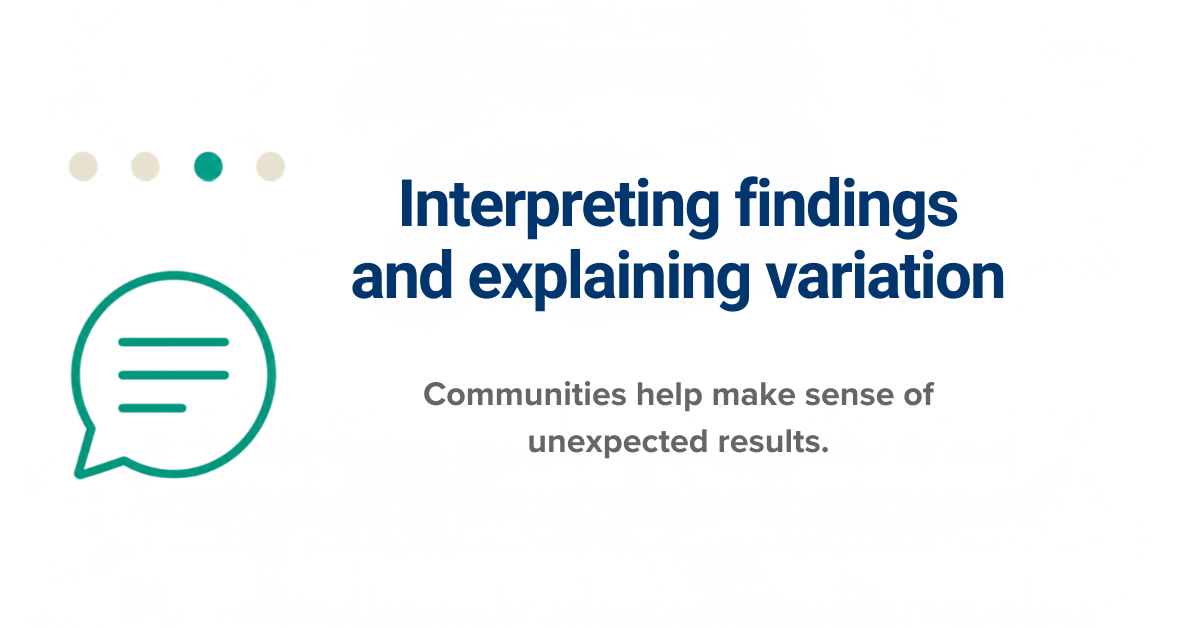
Unfortunately, participation is often treated as a discrete activity: a focus group, a feedback session, or a validation workshop conducted at the beginning or end of an evaluation. When participation is confined to a single stage, communities often become sources of data rather than partners in understanding it. Evaluators may hear what people experienced, but miss the opportunity to work with them to interpret findings, explain unexpected results, or identify what those results mean for future programming.
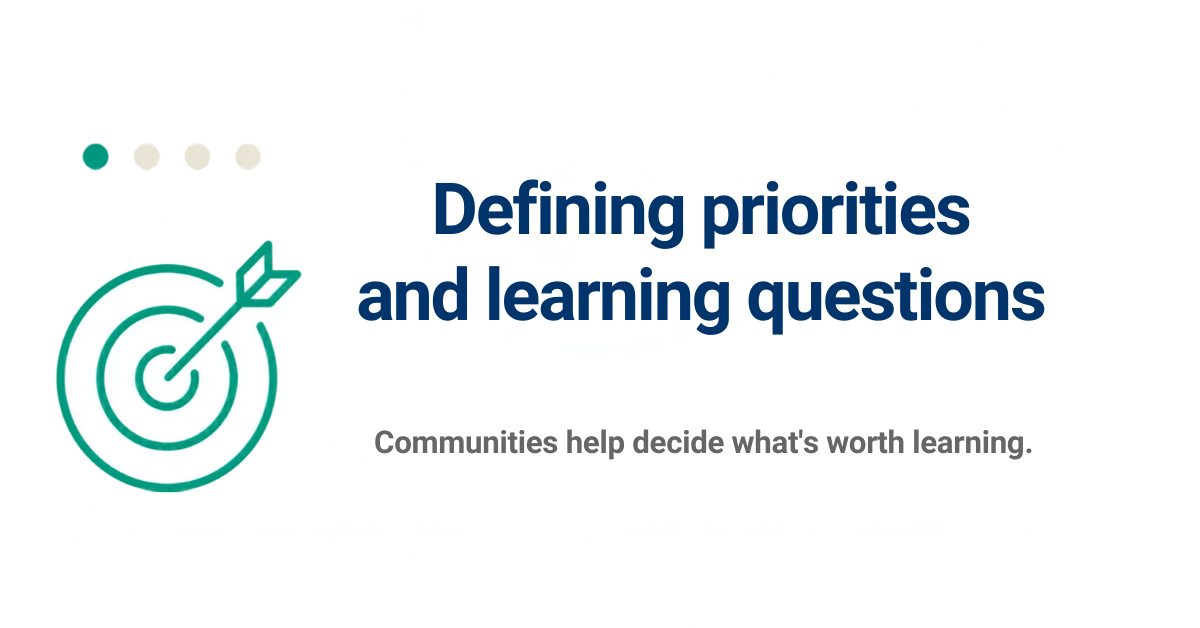
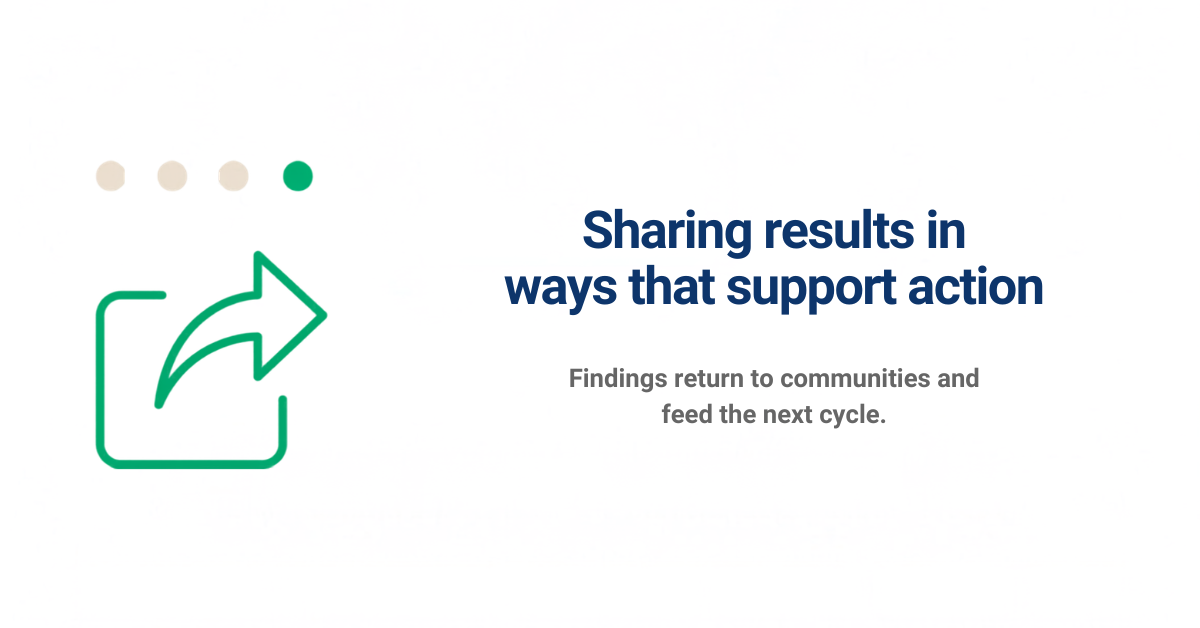
Community-centered M&E is most useful and sincere when participation is embedded throughout the evaluation process, as part of:
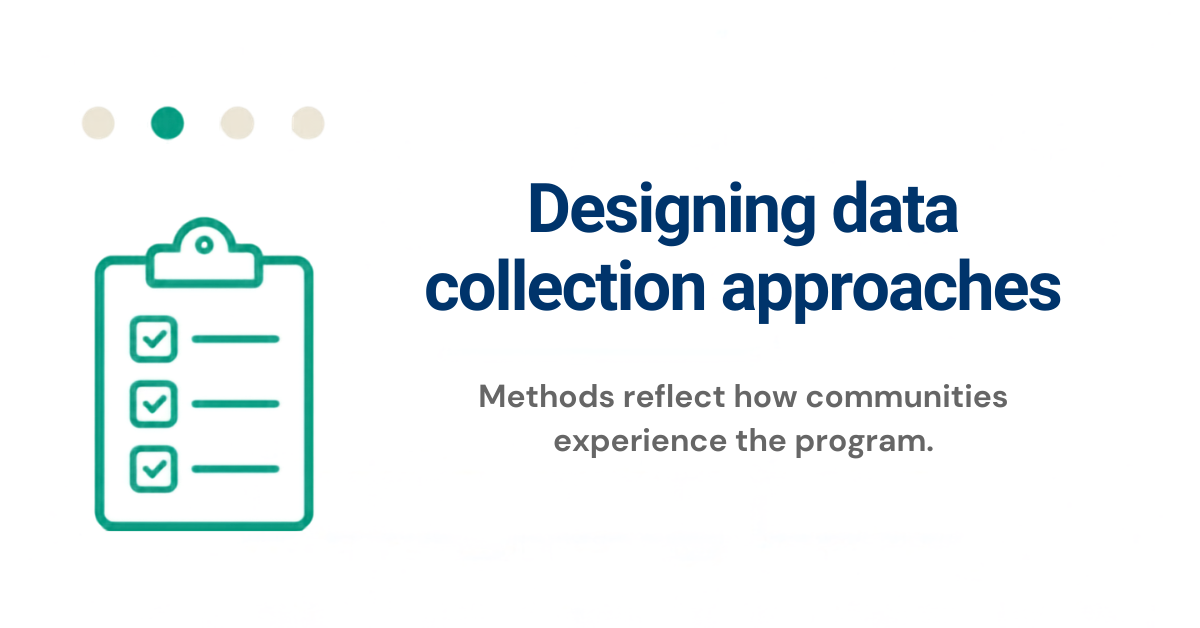
In Nepal, Apricity applied this principle through a mixed-methods approach that combined household surveys with qualitative interviews. The surveys helped quantify changes in agricultural practices, nutrition, and other program outcomes, while interviews with program participants, non-participants, program implementers, and local government representatives provided insight into how those changes were experienced and why they differed across communities. Together, these methods allowed us to move beyond measuring outcomes to understanding the perspectives, contextual factors, and implementation experiences that shaped them. Rather than treating qualitative data as a supplement, it became an essential part of explaining the quantitative findings and identifying lessons for future programming.
During my Peace Corps service in Ghana, participatory approaches were embedded throughout program planning and implementation. Community members conducted SWOT analyses, identified priority interventions, and contributed to implementation and monitoring plans. The value of this approach was not simply that it was inclusive. It was that it produced programs that better reflected community priorities, available resources, and local realities. Participation, in this sense, is not a single method. It is a way of improving how decisions are made.
Expanding What Counts as Evidence
Community-centered M&E not only deepens consultation but also broadens how evidence is understood—a pattern we've seen hold across evaluations from Nepal to Yemen to Uganda. Traditional evaluation systems often prioritize formal indicators and externally generated data. These indicators remain important. But communities also possess knowledge about local constraints, incentives, informal systems, and everyday realities that may be invisible to external actors. Ignoring that knowledge creates blind spots; incorporating it strengthens analysis.
Community-centered approaches do not replace standard metrics. They help explain them. They provide context for understanding why outcomes differ, why interventions succeed in some settings and struggle in others, and why implementation rarely unfolds exactly as planned. In this way, community perspectives are not separate from the evidence base; they are part of it.
What This Means for Practice
Shifting toward community-centered M&E does not require abandoning existing methods. It means rethinking how they are used. Three practical changes can significantly improve evaluation quality:
1. Start with stakeholder-defined questions - design evaluations around what different groups need to know, not only predefined indicators.
2. Treat differences in perspectives as signals, not noise - divergent views between stakeholders often provide the most valuable insights into how programs function in practice.
3. Build participation throughout the evaluation process - incorporate community perspectives during design, data collection, interpretation, and dissemination, not only at the end.
These shifts move M&E from a reporting exercise toward a learning and decision-support tool.
The Bottom Line: Understanding Before Improving
At its best, evaluation is not simply about accountability. It is also about learning. Organisations invest in evaluation because they want to improve programs, make better decisions, and understand what should happen next. Achieving those goals means doing more than measuring outcomes. It requires understanding how those outcomes were produced and how they were experienced by the people most affected by them.
Community-centered approaches help make that possible. They produce evidence that is grounded, relevant, and consequently more useful for decision-making. If we want evaluations to help improve programs, we need to do more than collect data from communities. We need to learn with them.
Sarah Staub is part of the Apricity team. This piece draws on experience gained through that work but reflects her own views and conclusions.